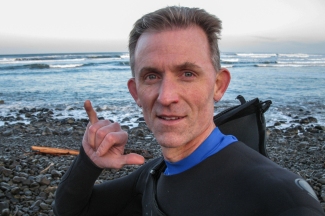
Surfing

I really don’t care if my Seaside surf pictures are mediocre

(Click on each photo to see a larger picture on a separate picture page.)

I have not had time lately to go out and take new images. So I simply shoot a few memory shots whenever I head to Seaside, to  work on my surfing skills. Today was tough. The waves came in about every 9 to 12 seconds, and they were at least 5 to 6 feet high. I should have waited til midday, when the sets would space out to every 20 seconds and the wind had calmed down. So that is my lesson learned. I have learned something every time I surf, which is why I like this sport. Also, don’t go out in the chop.

Unlike most of the region, I was able to see the moon over the ocean, which was lovely. I also played hide and seek with a juvenile harbor seal. It watched me as it bobbed in and out of the waves and as I struggled to find a spot to find a wave. I envied its flippers.

In the end, I caught my requisite waves, including a divine pulse of energy that brought me from a far break to the shore. Love that. I met some nice surfers, as always. One guy grew up in Santa Cruz, had lived in Maui, and now calls Portland home. For him, this has to be rough going from perfection to imperfection. For me, it’s what I know, and what I love.

As for taking fine art pictures and telling compelling photojournalistic stories? I will eventually get back into that, as soon as I get my forthcoming book published. There is only so much time in the week, and I do have a thing called a job that takes up time.

Oregon surfing seen through a point and shoot lens

I started surfing in Oregon in August 2016. I am now thoroughly hooked. I watch surf reports regularly for my favorite spots like Seaside Cove and check out the cove’s enticing but tiny surfcam. It’s a great antidote to stress and life’s worries.

suited-up-an-ready-2

Heading out on a cold winter day at Seaside–loving every minute of it!

So, just the thought of going surfing makes me calm. Surfing itself is transcendent. On the Oregon coast, it is usually rough, with lots of choppy sets. You seldom get those clean lines like you see in Southern California. Here we have the fickle north Pacific to deal with. But I do not let these downsides overcome the upsides.

When I head to the coast I never take a good camera with me. Mainly, when I go to the beach, I go to surf. In my to-go bag, I usually toss in my old Canon point and shoot, set it on zoom, and hope I get something nice. For now, my surf photography is more about telling the story of a place. The pictures do not have to be great to convey the feeling of being in a 5/4/3 wetsuit, bobbing in the cold water, plowing through a gnarly break, and hoping you get a great ride. When you do, nothing else really matters. It is a feeling of bliss. I hope you feel that in these pictures. I do.

Lastly, I have met mainly great people out on the coast. Most everyone is in a good mood. I especially love seeing the older masters on their longboards, kicking my sorry butt and looking so fine. Surf on, Oregonians.

Seaside Cove on a winter’s day

Seaside is a small coastal community about 85 miles northwest of Portland. It is best known as one of the premier surf spots in the Northwest, thanks to the break that hugs the point that juts out into the Pacific just south of the city. The surf website Surfline boasts it offers the “best left-hand pointbreak in North America.” This of course inspires visitors and also localism that has become of the stuff of local legend. A TV news reporter once endured abuse from local bad boys, countered by an effort to counter the incident by locals. There are also stories of slashed tires of those who park near Seaside Point.

I have avoided the beach for months because of the fierce localism reputation the community has earned, but could not resist coming on a day with small waves and clean sets I could see on the local beachcam. I put in at Seaside Cove, which lies just north of Seaside Point. When I arrived at around 10 a.m. on Jan. 6, 2017, clean sets with waves from 1.5 feet to 3 feet were rolling in nicely. Longboarders were popping left and right. The sun was out, and the winds were calm. It was, however, cold. My car thermometer showed 25 F when I stopped. The frigid air did not stop the 30 or more surfers I saw putting in during the next four hours.

My experience proved memorable. It was the first day I caught waves the full distance from the break to the shore. I had overcome a few plateaus, but I still had to work on choosing my waves as far out as I could be. I was hampered by having a “fun board,” which is shorter than a longboard. Longboarders were able to catch the waves farther out, and I could not navigate around them to their spot. Still, it was a perfect day. The scene was mellow and friendly. Whatever reputation surfers have here did not mesh with the vibe I found. I think the perfect winter surfing day put everyone in a great mood. There were more than enough breaks and enough space for everyone, from experienced gray beards to rookies.

California “mission surf”–a success!

Click on each photo  to see a larger picture on a separate picture page. Note, I used a basic point and shoot Canon–these photos were not meant to be fine art or high resolution. They do, however, tell a story.

I just returned from a six-day surf and tour adventure in southern and central California. It exceeded my expectations. I needed to cleanse all of the mounting stress from work, other life issues impacting people around me, and current events from Syria to my increasingly polarized and right-leaning country. The Pacific Ocean, and its cleansing waves and water, are a good way for me to detoxify the mind and soul. Reality has not changed, but my ability to respond creatively to it has vastly improved.

I originally had planned this trip to hit the great surf beaches from Santa Barbara all the way to Arcata. However, an injury delayed my departure by more than a month. When I left, on Dec. 1, winter had arrived, making any visit to surf spots north of San Francisco untenable. My first night camping at El Refugio beach dipped into the 30s. That was the last night I decided to camp. So, I adapted and focussed on three renown surf spots: Santa Barbara, Morro Bay/Cayucos, Santa Cruz. My surf stops included:

  • El Refugio State Beach Park, where I camped and caught mostly small waves on a calm day.
  • Sand Beach, in Santa Barbara (also called Coal Oil Point), by the University of California at Santa Barbara, where I surfed for two days and had some amazing rides and great moments in a beautiful place. Great surfing by the Santa Barbara women here.
  • Cayucos, in Morro Bay, where I caught some waves that tossed me around like a feather; I prematurely timed my visit in the water two hours before things settled down.
  • Pleasure Point, in Santa Cruz, where I first tried to ride waves at 38th Street and then moved closer to where the really great surfers were long boarding at Pleasure Point.

My skill level did not improve that much, so maybe I am a slow learner. It was definitely worth the time to do this. The rides that I did catch brought on that huge Buddha-like grin. Even the bad news about the latest appointments to the new Trump administration did not send me into despair as it might have a week earlier.

The other highlight of my trip were my visits to six historic California missions, where the Spanish colonial government and Catholic Church established outposts throughout coastal and western California, starting first in San Diego and then all the way north to San Francisco. I visited in order: San Juan Bautista, San Miguel, Santa Barbara, San Luis Obispo, Carmel, and Santa Cruz missions. They tell a story of the state’s transition from thousands of years of habitation by Native Americans, to conquest and ultimately cultural destruction at the hands of first Spain, then briefly Mexico, and finally the United States. Two of the missions I photographed, San Juan Bautista and San Miguel, both mentioned the graves of thousands of Indians who died in and around the missions during their long life span. Little evidence of their graves and these Native Americans’ role serving these missions is provided to tell their full story at colonial outposts that sought to convert and conquer the native people. Still, I love these places. They are a window on the past that is mostly forgotten. I will do a photo story on them shortly.

In the end, my “mission surf” project brought many rewards. The photographs are just pleasant reminders what filtered into my skin.