Nature

Fort Rock State Natural Area, a sacred place

This is the first of a couple of posts I will do on Fort Rock State Natural Area (formerly park), in the high desert of south central Oregon. I wanted to show its features today from the perspective given by my GoPro, which has a unique and very wide angle perspective (and distortion).
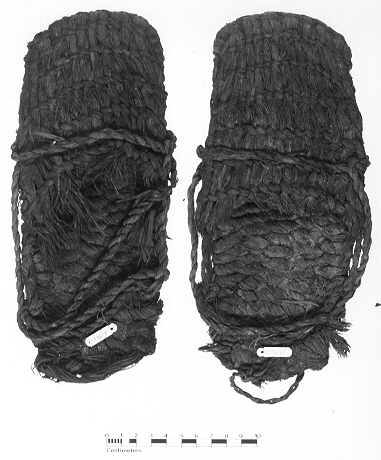
These sandals were found a mile from Fort Rock State Natural Area and are approximately 10,000 years old (photo courtesy of the University of Oregon). These sandals were found in 1938 by archaeologist Luther Cressman.

These sandals were found a mile from Fort Rock State Natural Area and are approximately 10,000 years old (photo courtesy of the University of Oregon). These sandals were found in 1938 by archaeologist Luther Cressman.

Fort Rock is a gem. It stands prominently on the floor of what was once a lake bed. The formation is an extinct volcano that blew about 1.8 million years ago. Archaeological evidence dates Native American habitation here for at least 10,000 years. A research expedition in 1938 unearthed dozens of sage bark sandals under a layer of volcanic ash about a mile from here that are carbon dated as 10,000 years old. So clearly the continent’s first peoples have been coming here for many millenia.

I felt a touch of the divine and sacred here. How can one not. Its circular formation, its prominence on a desolate landscape, its energy when one stands on the rim of the crater–all create a feeling of otherworldliness. I saw deer and jackrabbits, so clearly food could be hunted here. It is well worth a visit. The area is about 70 miles southeast of upscale retirement city Bend, and there is no entrance fee. The state has also erected a recreated historic pioneer village near the entrance.

Click on each photo to see a larger picture on a separate picture page.

Scenes from the Columbia Hills, high on the Gorge


During my visit to Columbia Hills State Park last weekend, I took a hike to the crest of the hills that stand a couple thousand feet above the Columbia River Gorge, from the Washington side. There are miles of open space. Windmill farms lie to the east. To the south, one sees farmland and cattle country in Oregon. Beneath my feet were a dizzying array of blooming flowers, the balsamroot and lupine. I now rate this as one of my favorite perches in the Pacific Northwest.

The ducks were made for walking

Seeing happy ducks in the muddy wetlands not far from my home on a rainy night this week made me think of other happy ducks. Here is some footage I shot in the rice paddies outside Ubud, Bali, way back in 2009. (Ouch, that is so long ago already.) Now tell me, do these ducks have moxie or do these ducks have moxie. You can see a larger version of these critters on YouTube too.

Luarelhurst Park’s tree spirits

Laurelhurst Park in east Portland is about as English of a Portland park as they come. It is a perfect example of urban planning dating to the City Beautiful movement. Everything is so, well, proper and in its place. It felt like someone have used a vacuum cleaner before I came, even on a wet and muddy day. I loved the gnarly old arboreal denizens. They just begged for attention. So I returned after an accidental visit and grabbed a few photos.

A mini adventure at Wahkeena Falls

During the past year I discovered the writings and videos of British adventurer Alistair Humphreys. He biked around the world, wrote a book about it, and then turned that into a career of motivational speaking, media production, and discovery. I like his spirit. I like his style. So, Alistair, I am totally ripping you off here, even stealing your term (well, just this once) for this short video highlighting a great trail near Portland. I came to Wahkeena Falls a year ago and loved the place. It is a steep climb up a great trail on the Columbia River Gorge, about 30 miles from downtown Portland. This trail climbs more than 2,000 feet in elevation and provides a few great views of the Gorge. In the spirit of Alistair, I am branding this a “microadventure” because it really is. I will develop my own branding later. Hope you are not too tweaked about this, mate. Mimicry is a form of flattery, as they say.

It’s all about the grain, and the global marketplace

Vancouver, Wash., is home to the United Grain Corp.’s export terminal. According to the company, the grain elevator complex is the largest grain elevator on the West Coast. This is a massive facility. The complex dominates the landscape on the banks of the Columbia River north of Portland. Cargo ships will line up on the Columbia River and basically park in the river until there is a berth for at the terminal or across the river at the Port of Portland’s export terminal on the Willamette River. Wheat grown in western Washington is one of the main exports, mainly for global markets.

I took the photos of the anchored cargo vessels from Frenchman’s Bar Park, in Clark County, just north of Vancouver. It is a beautiful spot to see how the global commodities market works–one ship and one train at a time.

No stick is too big when playing fetch

Hot diggity. I love finding a beautiful new place that is ignored by the busy world and destination tourism. Frenchman’s Bar Park is such a place, in Clark County, Washington, just north of Vancouver. The park lies along the Columbia River, and many fishermen, dog owners, and families can be found on the sandy banks. I loved this mutt. He didn’t understand the meaning of, you can’t fetch that. He just did it. Good boy!