I did a quick trip to St. Louis, Missouri, on October 16 and 17, 2026. I grew up in this area, and I left for good in 1983. I still come back year, now to see an ailing family member in nursing home care.
On this trip, I once again stayed near Forest Park, the crown jewel of U.S. urban public parks that is perhaps one of the best places in the country to enjoy cultural and natural amenities in an urban setting. It’s also a great walking and running destination. Any runner who has ever visited St. Louis has likely run around this park.
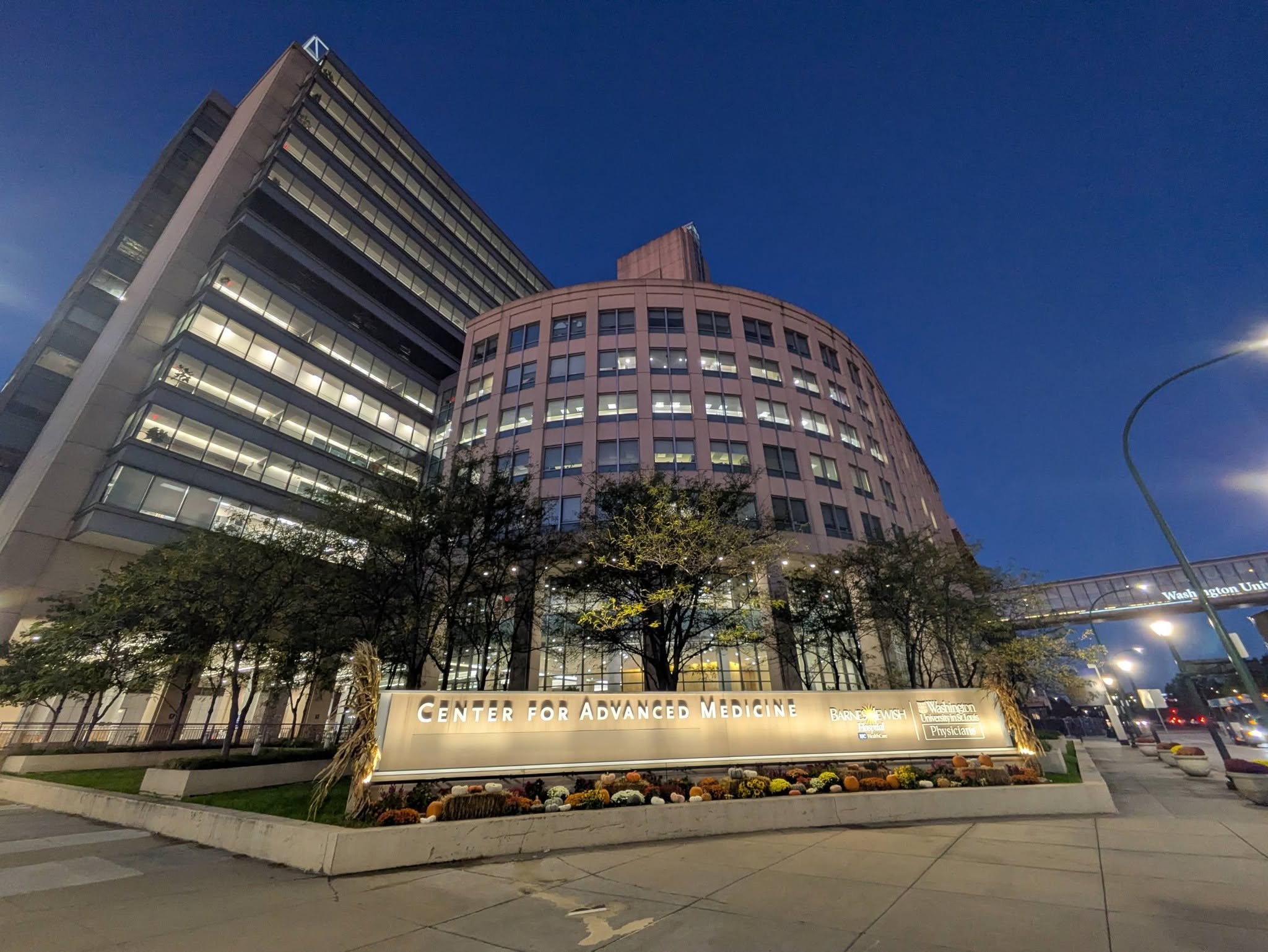
My hotel, on Forest Park Parkway just to the east of Forest Park, was near the upscale Central West End and the region’s premier medical and health research complex called Barnes-Jewish Hospital, the major facility in the large health system’s more than 12 healthcare facilities.
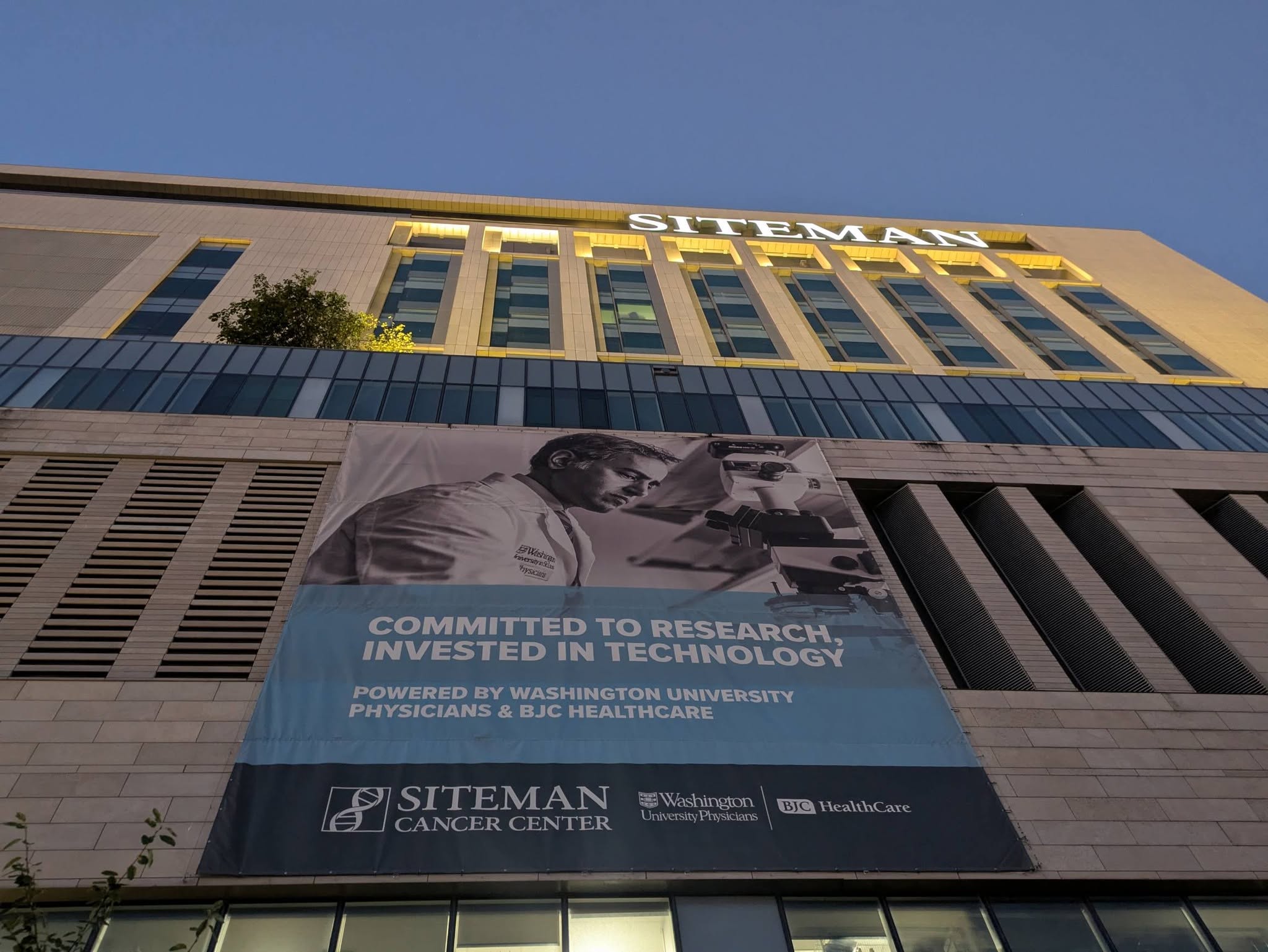
After visiting my family member’s nursing home on my first day, I checked into my hotel and then ran a few blocks towards Forest Park. I passed by the Washington University medical research facility. The elite and massive land-owning private college located in St. Louis and University City, next door, has its medical school adjacent to the Barnes-Jewish Hospital complex, and is fully integrated. Together these two powerhouses are among the major economic players in the city, county, and region.
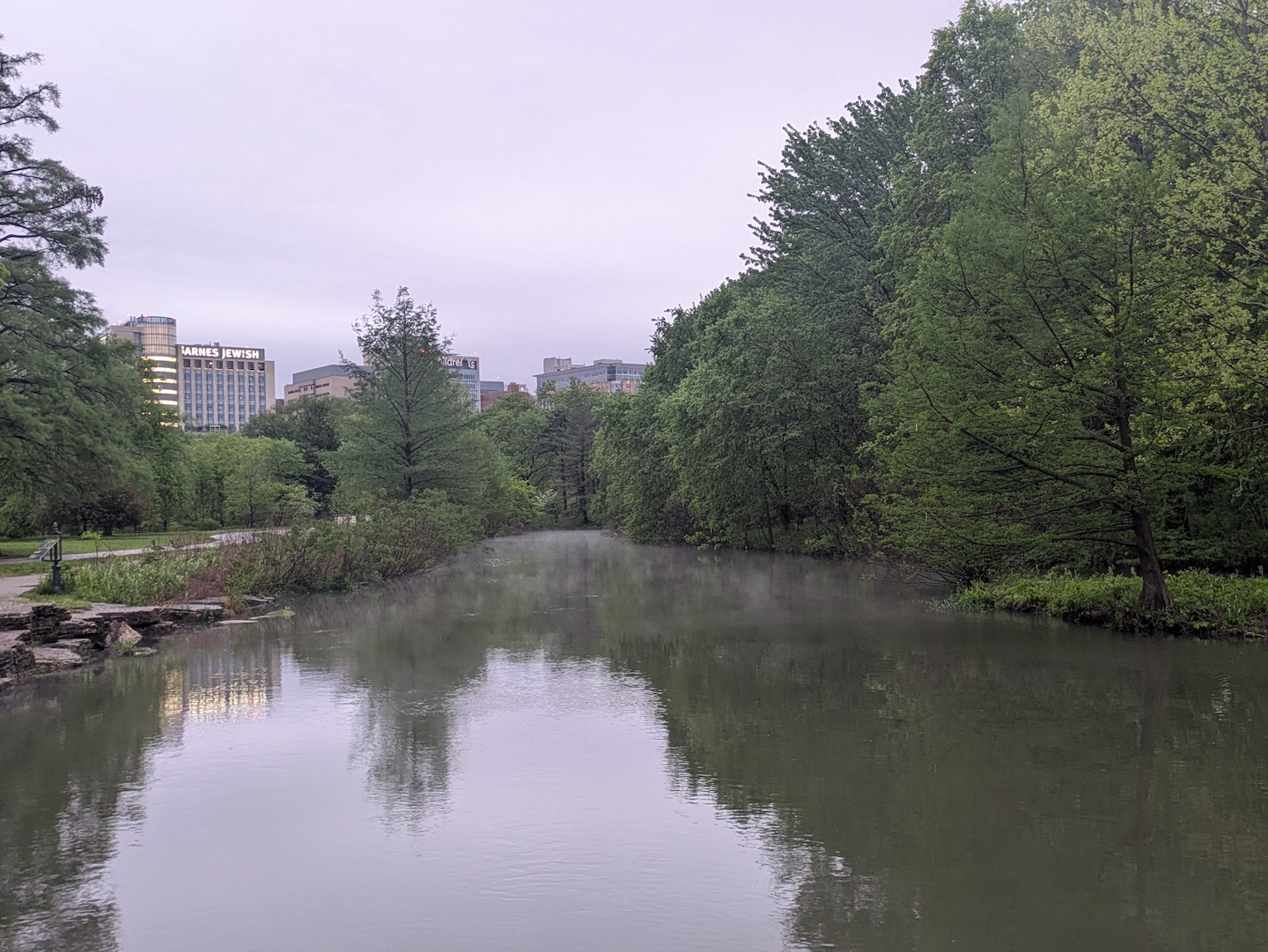
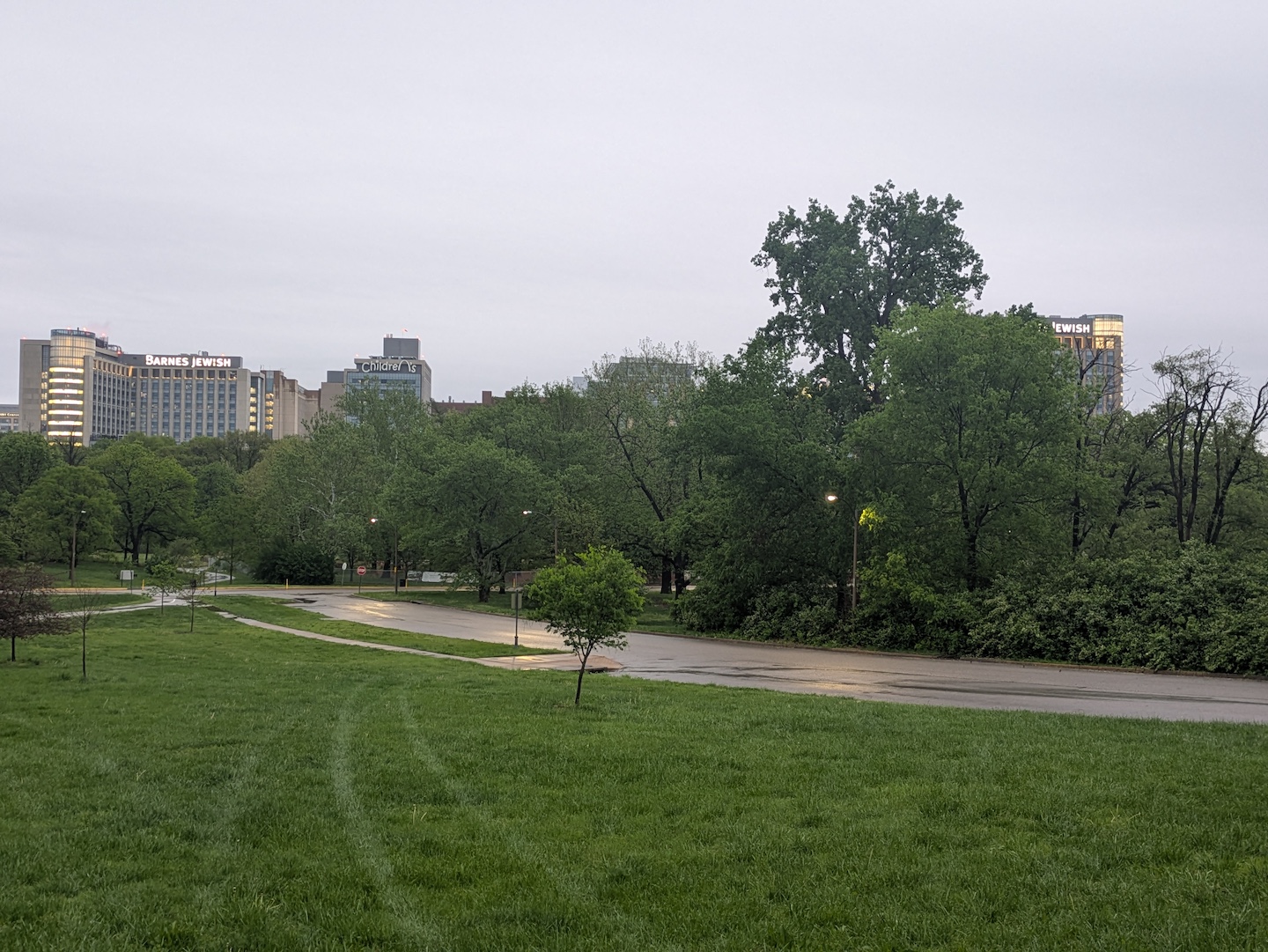
My run, in the rain, finished after over six miles and had me approach the east end the park, where the medical towers tower over the trees, looming tall like a castle. While picturesque, they\ modern medical buildings also epitomize the way the United States has created inefficient, high-cost healthcare that embodies for-profit health in the country—the only modern country without a national health system.
Before I went back to visit my family member at their nursing home in south St. Louis County the next day, I did a walk starting at 7 a.m. The skies had cleared. It was clear, sunny, and glorious.
The gleaming towers I spotted on my walk back to my hotel seemed radically out of place in a city that has seen its population shrink nearly two thirds since the 1960s. It has had its industrial base disappear with deindustrialization, the disappearance of manufacturing to outside of the country, and the abandonment of the city center with suburbanization.
What’s left are the empire builders of the new economy, scooping up the ruins. On my walk, I was left to marvel, from the lush, magnificent Forest Park, the new masters of St. Louis: the Washington University and Barnes-Jewish medical and property owner complex and empires.
We used to have a city where working families lived. But that’s now in the now distant past. That reality ended decades ago.

