




Finland’s Independence Day, itsenäisyyspäivä, is celebrated each year on December 6. It commemorates the day the Finnish Parliament declared independence from Russia in 1917, as Europe was being torn apart by World War I and as Russia was convulsing in its own violent revolution. Finland would soon have its own bloody civil war soon after, in 1918, with the German-backed “whites” defeating the USSR-supported Finnish communist forces, the “reds,” with a decisive and destructive battle in Tampere led by Finnish war hero Carl Gustaf Emil Mannerheim.
For the Finnish people, it marked the first time ever that the country was finally free of foreign domination after more than 700 years of colonization, Christianization, and conquest and rule by Sweden, from the mid-12th century to 1809. It then endured 108 years of Russian domination and rule. It finally became a nation amid the chaos of World War I.
After the Tsar’s rule was toppled, the Parliament of Finland made its Declaration of Finnish Independence on December 6, 1917. The new Nordic nation sent requests to be recognized as a sovereign country to Sweden, Norway, Denmark, Germany, France, and the United Kingdom. The Bosheviks in what became the USSR formally acknowledged Finnish independence on December 31, 1917.
Many Finnish citizens in most communities commemorate their independence with formal and solemn events, often involving war memorials than can be found in every city and every community, no matter how small, throughout the Nordic country, like this event planned for December 6, 2024 in Kuopio, at a memorial, or at churches, like this event the same day in Helsinki.
My Finnish relatives, who I only met for the first time in September 2023, told me the day for most Finns has special significance as a remembrance of the war dead, who died in Finland’s three conflicts during World War II: The Winter War, against the USSR (1939-40); the Continuation War (1941-44), against the USSR; the Lapland War against Nazi Germany (former ally, 1944-45). Some of the pictures I’m seeing posted as day awakens in Finland on December 6, 2024, are of people reading the great Finnish war novel, Väinö Linna’s The Unknown Soldier/Tuntematon Sotilas.
It was a brutal time, when Finland, a much smaller nation, faced an adversary with vastly superior resources and weaponry and withstood an unprovoked attack at great cost. Finland ultimately lost more than 10 percent of its land, but was never brutally occupied by the USSR like Estonia, Lithuania, and Latvia, or like other Nordic countries, Denmark and Norway, by Nazi Germany. However, the Nazis fought a scorched earth campaign in late 1944 and early 1945 against Finland when Finland turned on them to reclaim their nation and make peace with the USSR. The Germans left a trail of ruin as they were driven from Lapland, where they once were stationed as allies. The harsh peace signed with the USSR ultimately saw Finland retain its territorial integrity and maintain its independence against heavy odds.
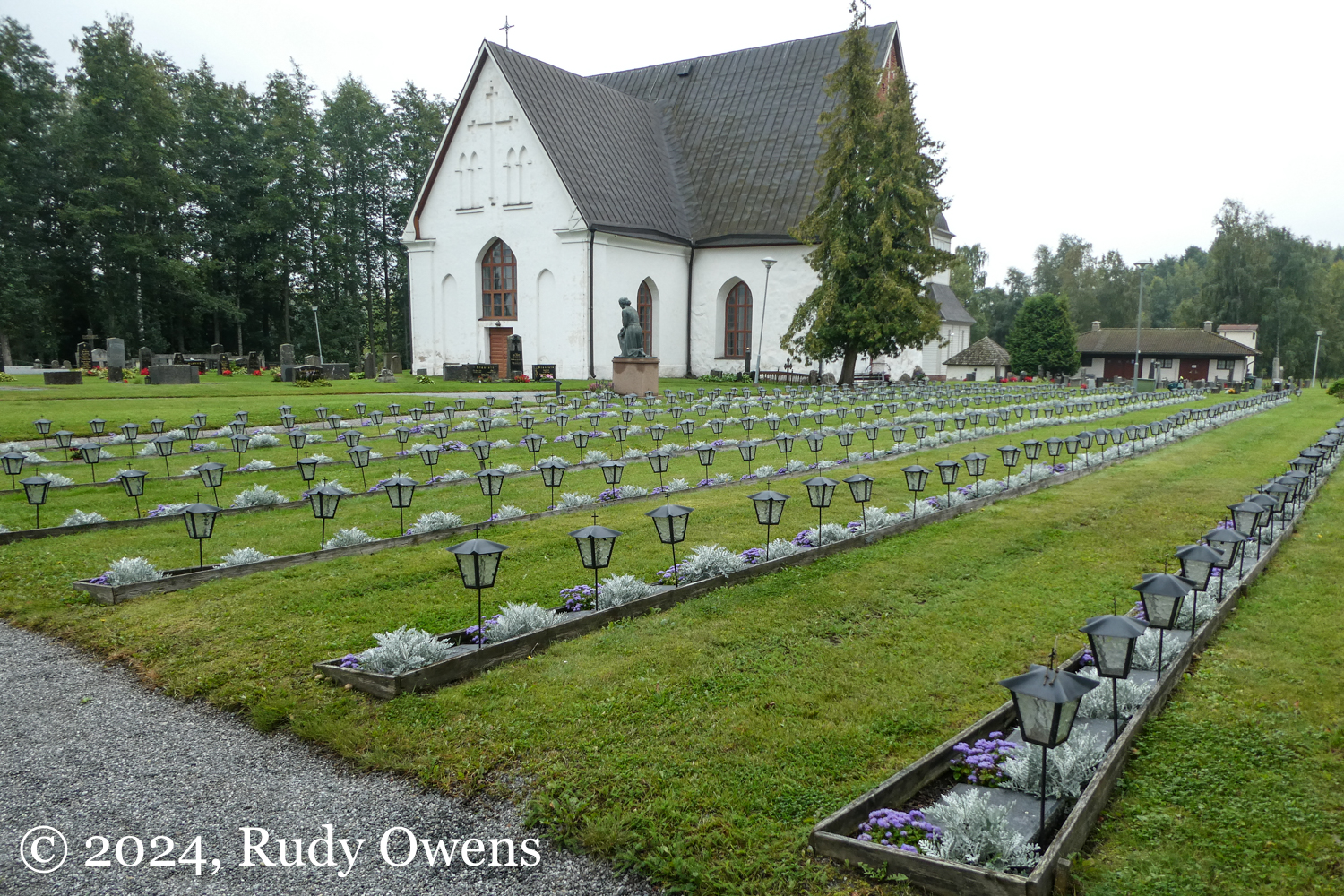
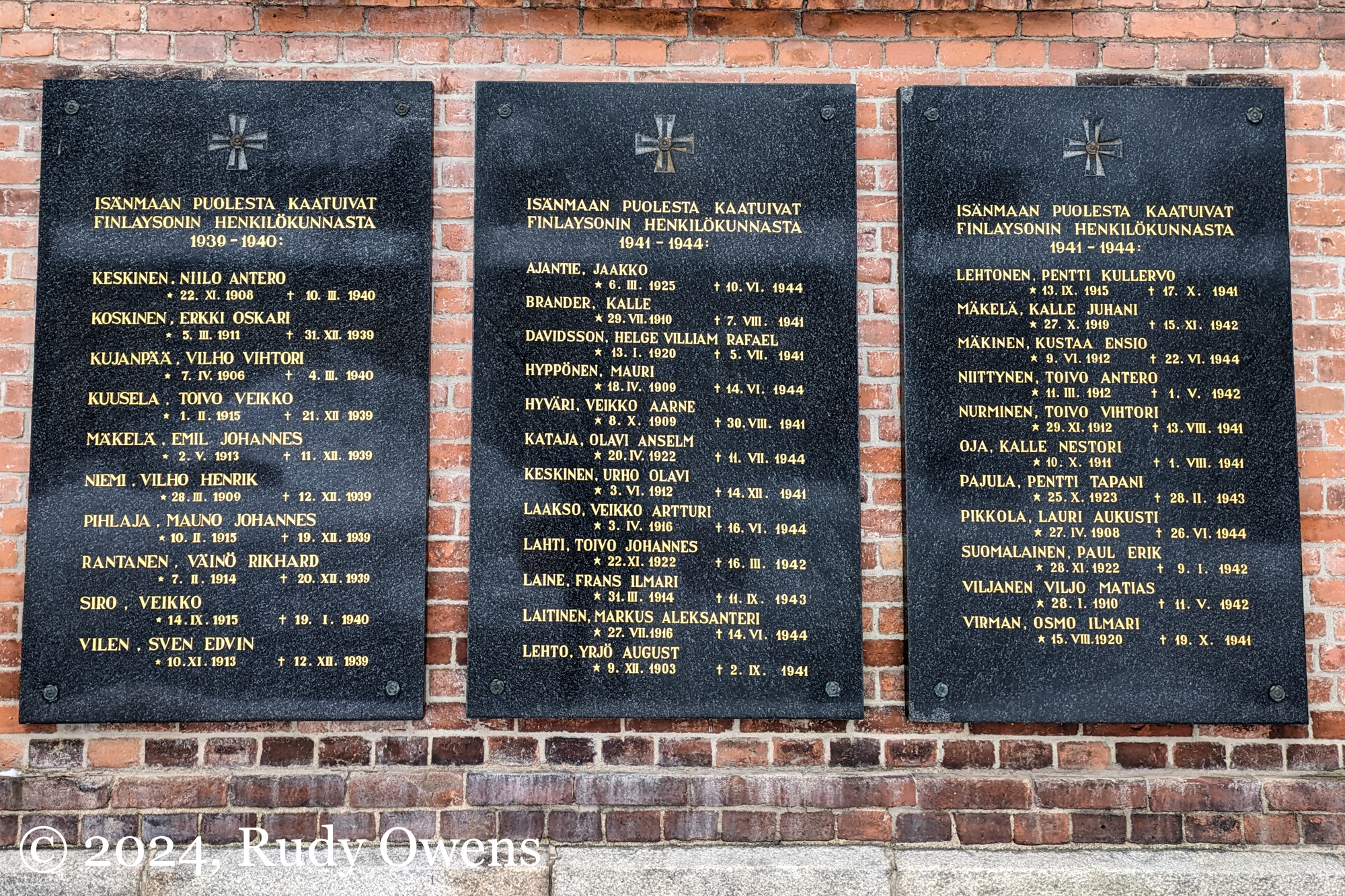
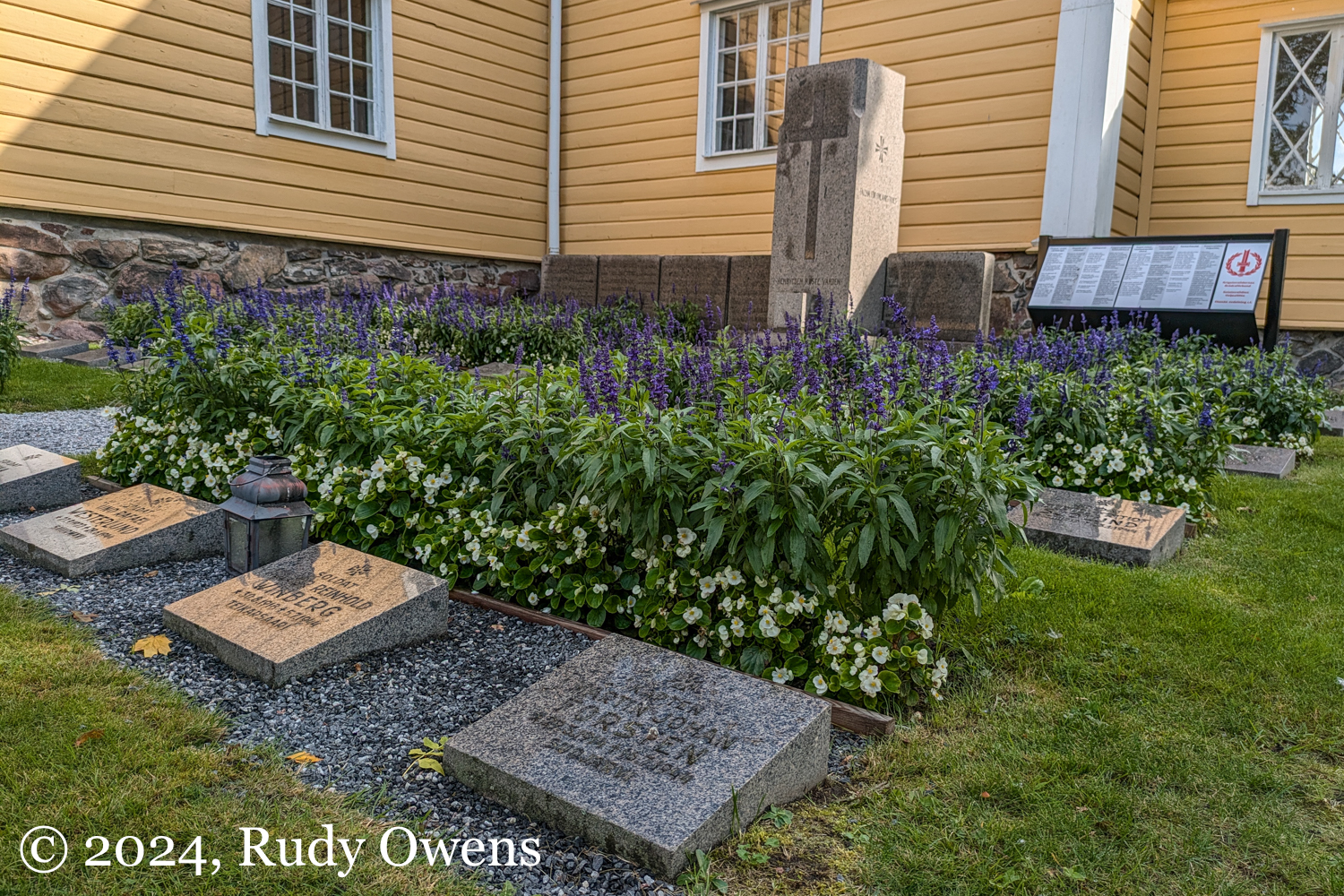
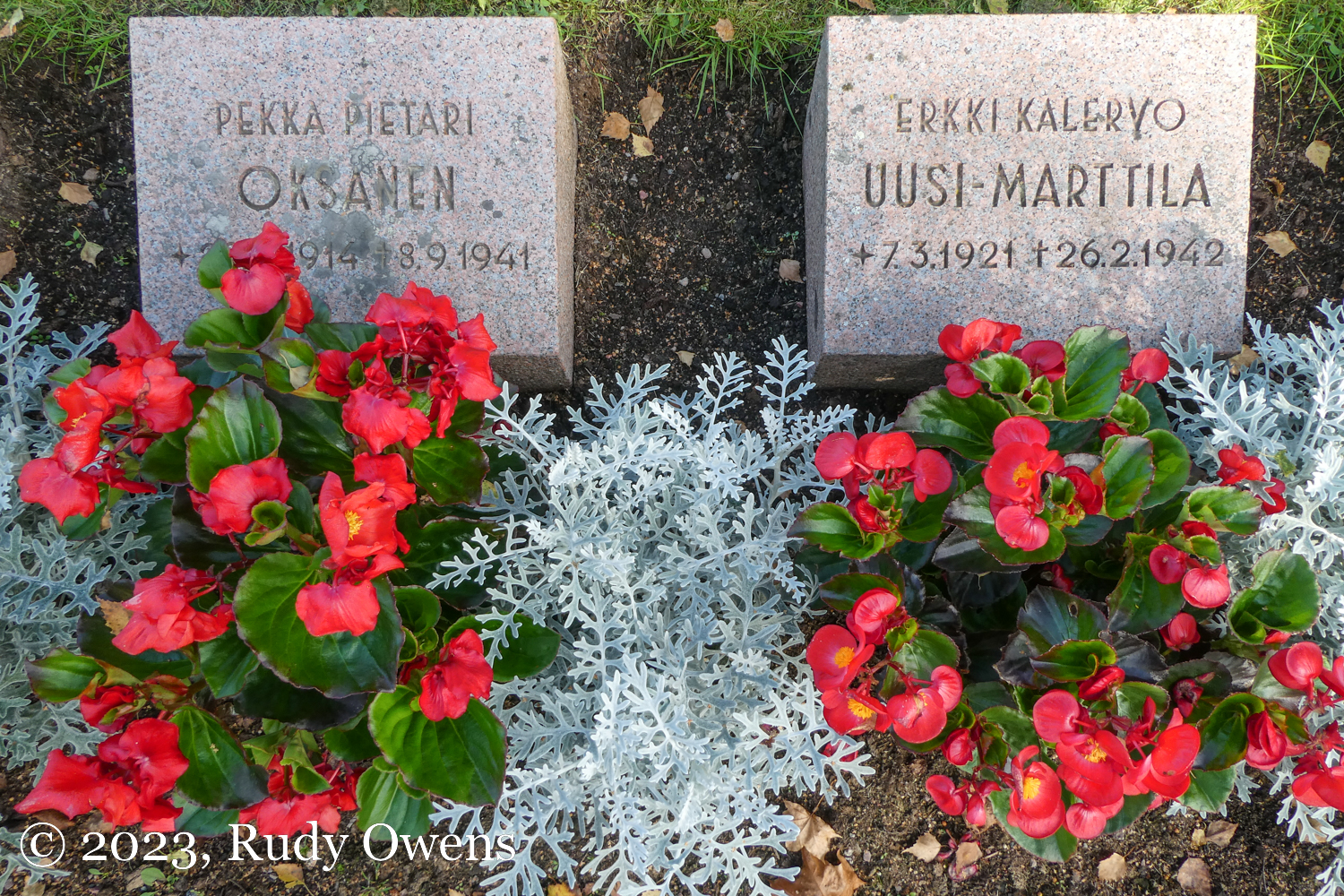
During my three trips to Finland since August 2023, I have been documenting the way the country and its people remember the trauma of these wars, taking photographs of its war memorials and markers for the dead. Nothing has shaped modern Finnish identity more than these conflicts that took 95,000 lives of its soldiers between 1939 and 1945. Finland’s remembrance of these traumatic experiences are found in nearly every Finnish community, no matter the size or location.
Every city and village I visited had memorials. All of them. So I would stop my rental car, get out, and document what I found. Flowers were always fresh. Always. Every memorial I saw everywhere had fresh flowers. Everyone I went to had visitors. The past was always remembered. If you look for Finnish news of itsenäisyyspäivä, inevitably there will a photo at a memorial.
You can see my full photo gallery of the memorials and markers at cemeteries and public spaces on my Flickr photo page dedicated to these places.
 What Beautiful Light